Go-live is not the finish line.
ERP projects rarely fail because they miss a launch date. More often, they fail after go-live, when leadership realizes the business still doesn't trust the system.
Inventory is questioned. Planning moves back to Excel. Reports are debated instead of used. The software is live, but the business isn't running through it.
01 Go-live is not success.
A company can hit every implementation milestone and still miss the business outcome.
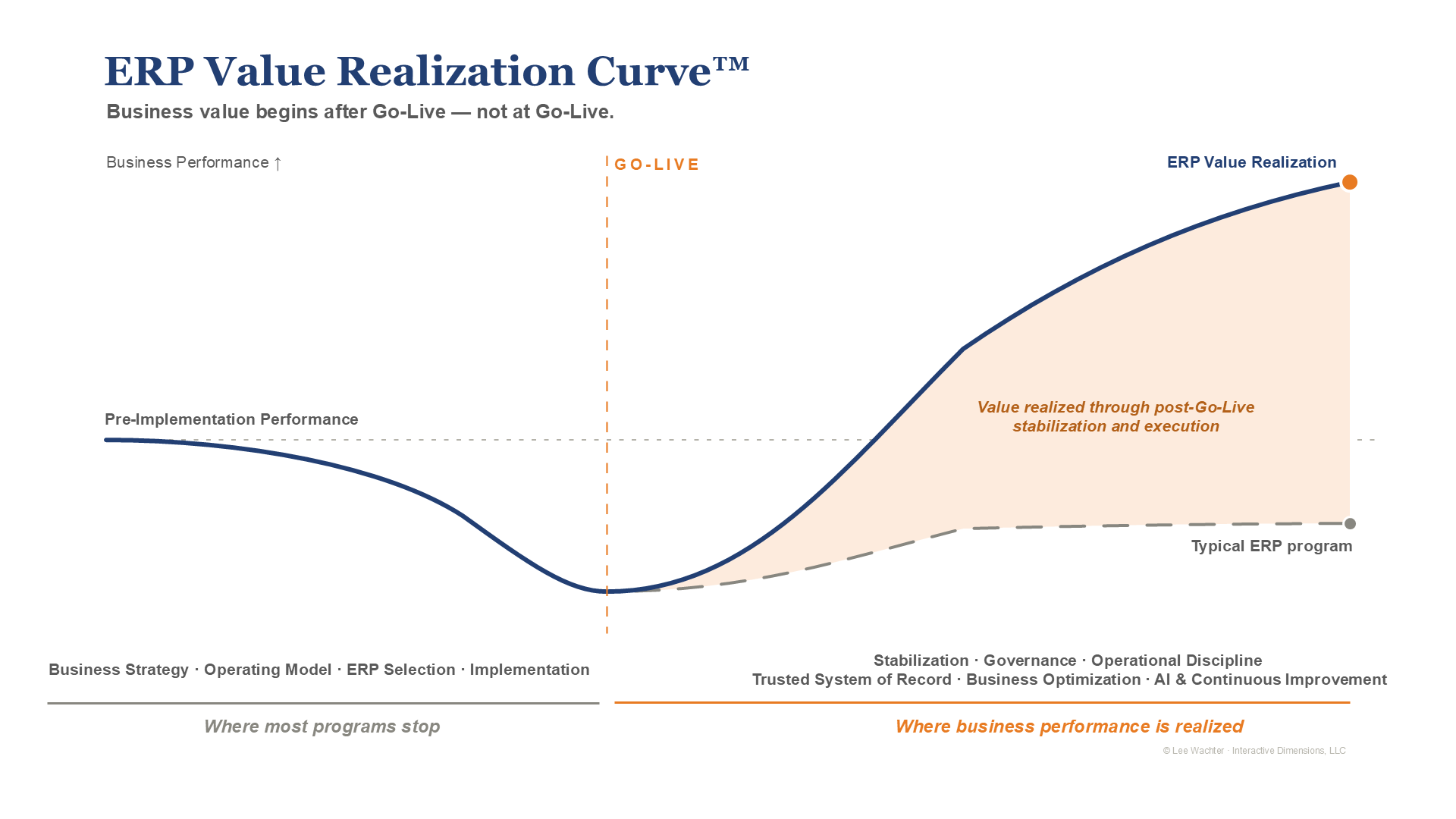
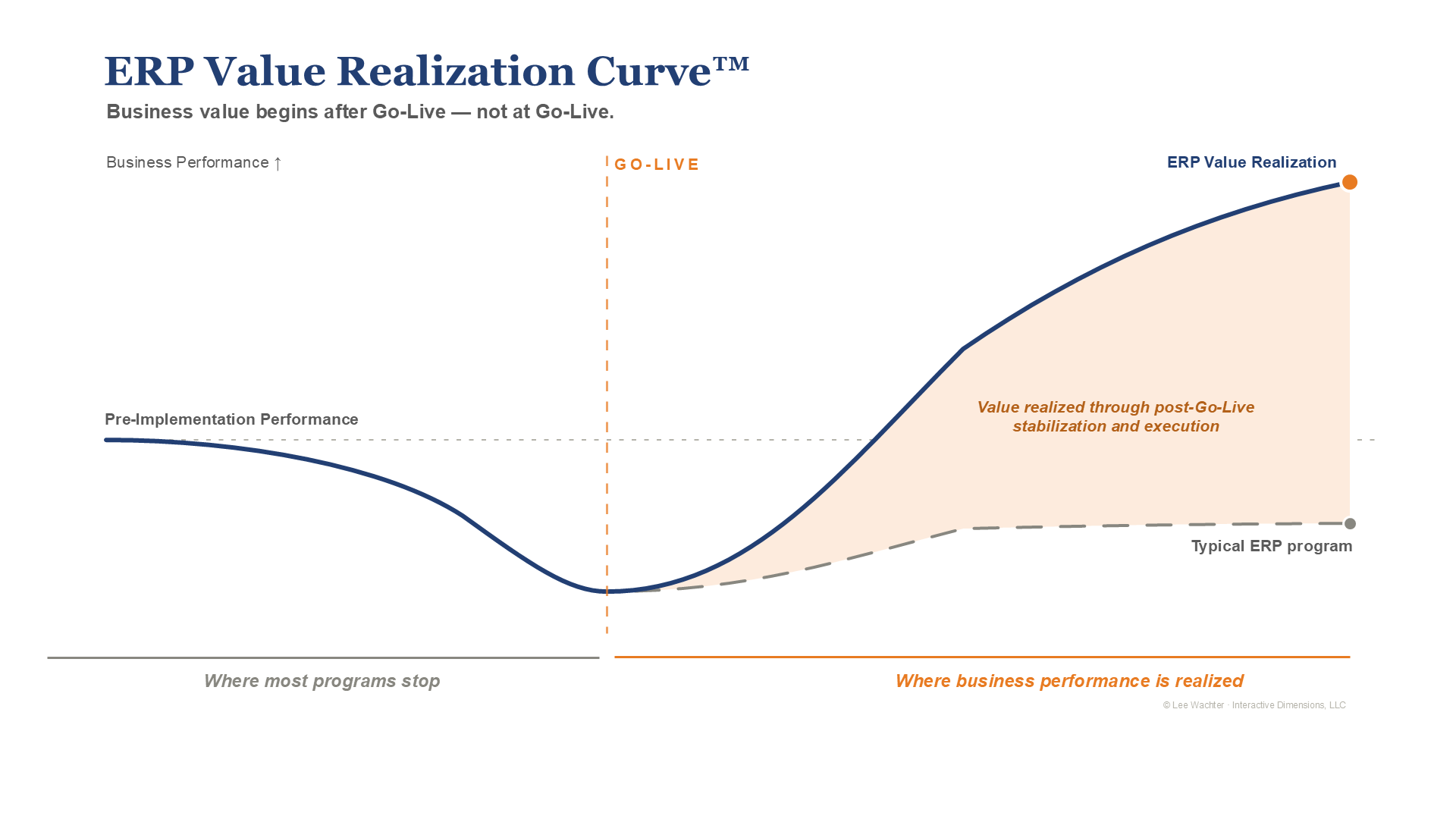
The real test begins after go-live.
Can leadership trust inventory?
Can planners work in the ERP instead of rebuilding plans in spreadsheets?
Are business processes followed consistently?
Are roles, ownership, and accountability clear?
If the answer to those questions is no, the ERP is not yet doing its job.
It may be live, but it is not running the business.
02 The ERP must become the trusted system of record.
Stabilization is not about forcing people to use the ERP.
It is about making the ERP reliable enough that people want to use it.
That requires trustworthy master data, realistic planning parameters, disciplined business processes, clear governance, and strong ownership long after the implementation team has left.
Without those elements, people naturally create workarounds.
Those workarounds eventually become the real operating system while the ERP becomes little more than a historical database.
03 Most ERP problems are business problems.
Software is easy to blame because it's visible.
In reality, the underlying issues are usually ownership, governance, accountability, and operating discipline.
Who owns the data?
Who maintains planning parameters?
Who resolves conflicts between sales, operations, finance, and supply chain?
Who decides whether the process should change or the system should?
When those questions remain unanswered, the ERP simply reflects the dysfunction that already exists within the business.
Stabilization means improving the operating model—not just changing screens, reports, or system configuration.
04 AI cannot outrun a weak foundation.
AI and advanced analytics can create tremendous value—but only when the underlying business data is reliable.
If inventory cannot be trusted...
If demand signals are inaccurate...
If lead times, supplier data, customer data, or operational workflows are inconsistent...
AI will not solve those problems.
It will simply generate faster answers from unreliable information.
The sequence matters.
First establish a trusted system of record.
Then apply analytics and AI to improve business performance.
Experience confirms what the research suggests.
Research from organizations such as Gartner and McKinsey reinforces what many executives have already experienced firsthand: ERP initiatives often fall short of their intended business outcomes, and AI initiatives struggle when built on weak data, inconsistent processes, and unclear governance.
My perspective doesn't come primarily from research.
It comes from leading ERP transformations, recovering troubled programs, and helping organizations translate technology investments into measurable business results.
Companies cannot optimize what they do not trust.
They cannot automate what they do not control.
My philosophy is simple.
Technology creates value only when people trust it, adopt it, and use it to improve the way the business operates.
ERP success is measured by business performance, not by a successful go-live.